Every pallet we heat treat for export goes through one of our two drying kilns at Bideford. Customers ask us what ISPM15 heat treatment actually involves, so here is the process, start to finish.
Why ISPM15 heat treatment exists
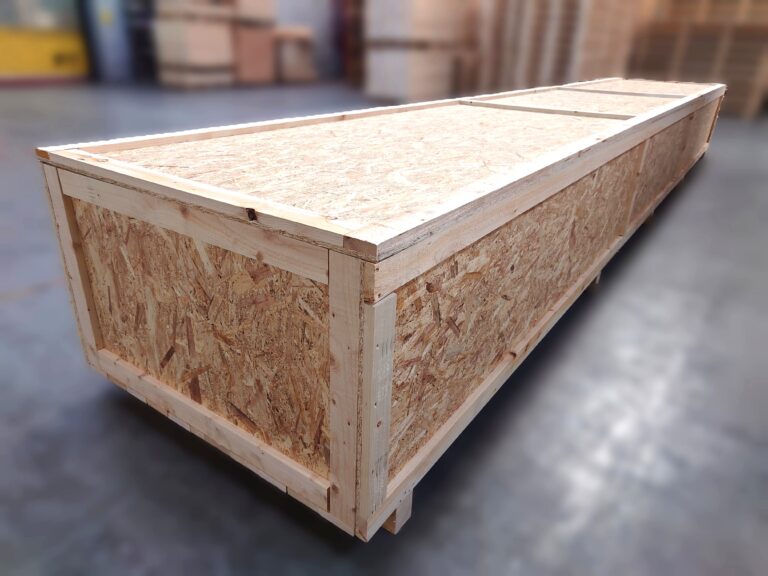
ISPM 15 is the international standard for solid wood packaging. It exists to stop timber pests travelling from one country to another inside pallets, crates and dunnage. Almost every country that APS customers ship to requires solid timber packaging to be treated and marked before it will clear customs. The rules for the UK are set out in the government guidance on wood packaging. Processed board such as plywood and OSB is exempt, but any solid timber battens, bearers or skid bases in the same build are not.
What happens in the kiln
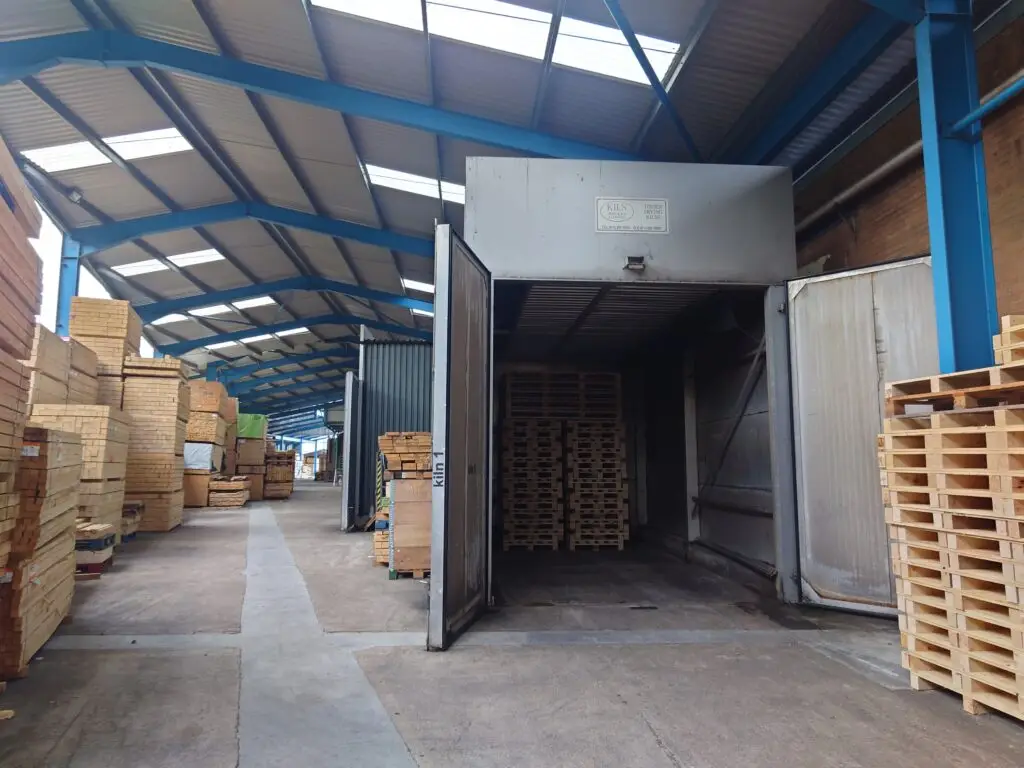
We run two drying kilns on site, each holding up to 300 pallets, and they run around the clock. A load goes in, the kiln brings the timber up to temperature, and probes in the core of the thickest pieces confirm the wood has reached 56°C and held it for at least 30 minutes. That is the ISPM 15 requirement. Only when the probes confirm it does the batch come out and get stamped.
The heat for the kilns comes from our biomass boilers, which burn the offcuts and sawdust from our own production. So the process that makes the packaging export-compliant is fuelled by the waste from making it, with no gas or oil.
Heat treatment or kiln drying?
They are different things, and the difference matters. Heat treatment holds the core of the timber at 56°C for 30 minutes, which kills pests but does not necessarily dry the wood. Kiln drying takes the moisture out, which makes the packaging lighter and more stable. A kiln dried pallet is not automatically ISPM 15 compliant, and a heat treated pallet is not automatically dry. We do both in the same kilns and will tell you which you need.
The mark
Each treated item is stamped with the ISPM 15 mark showing the country code, our registration number FC0542 and the HT treatment code. We are registered under the UK Wood Packaging Material Marking Programme and our kilns, records and marking are audited. Treatment records are kept for every batch, so if a customs officer on the other side of the world asks when a pallet was treated, we can tell them.
Why doing it on one site matters
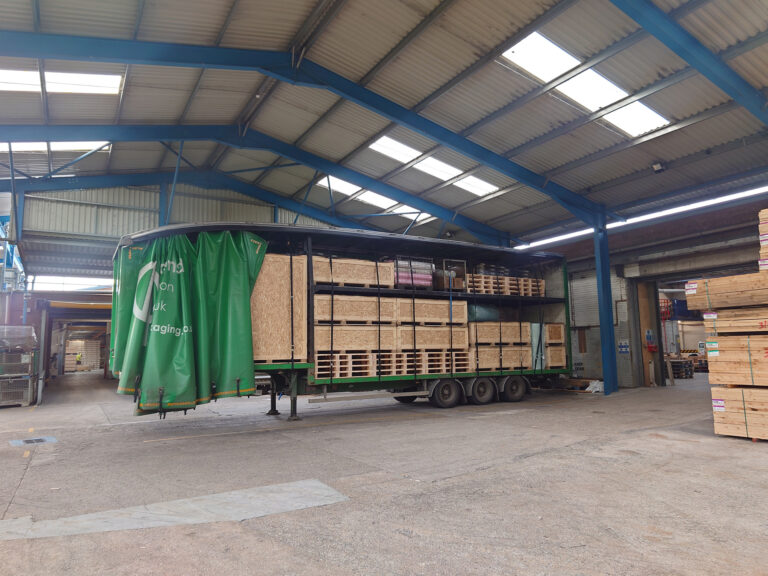
Many pallet suppliers send finished pallets away for treatment. We manufacture and treat on the same 300,000 sq ft site, which means an export pallet can be built, treated, stamped and loaded onto our own lorry without waiting on anyone else. Our crates are built from timber that arrives kiln dried and heat treated, and are stamped under the same FC0542 registration, so they do not wait for a kiln at all.
If you need pallets or crates that will clear customs, have a look at our heat treated ISPM15 pallets and our complete export packing service, or call 01237 423772 and talk to the people who run the kilns.